
Ways to Play
Welcome to Ways to Play—a living library of how we Play in the Dark.
Here, you’ll find real stories and reflections from the messy, magical, and deeply human journey of embracing the unknown. Each post is an invitation to meet your own darkness with curiosity, compassion, and play—discovering new ways to connect with yourself and the world around you.
Happy Endings
This weekend I got to experience a happy ending, and it feels so important — after so many painful losses in my life — to take a moment to celebrate and share what I learned about endings this weekend, especially for anyone that feels like they are sitting at the threshold and feel stuck.

It’s Electric, Boogie Woogie
Have you been feeling it? Last week I felt so much electric energy moving through my body. So much charge and change!!! I've learned to call this "aliveness."
In the past, when I felt this kind of frenetic energy in my body, I would attach a story to it: that something was wrong, that it was anxiety, fear, or chaos. But when I remove the story, it's just a lot of energy circulating through my body.
So, one of the ways I've learned not to attach scary stories to it (or burn out from the wild energy) is by asking myself, over and over: how do I play with this electric energy.

Fall in Love with YOUR Story
What if you thought about your life as a story? Think about it like play.
We actually are telling stories constantly — in our heads and to others. I notice for myself that the story changes depending on my mood, who I am telling it to, or what perspective I am telling it from. It is wild how often our story can shift. I believe it is important to realize we are all telling stories. AND our stories impact how we feel about ourselves and ultimately drive the plot of where we go in this life.
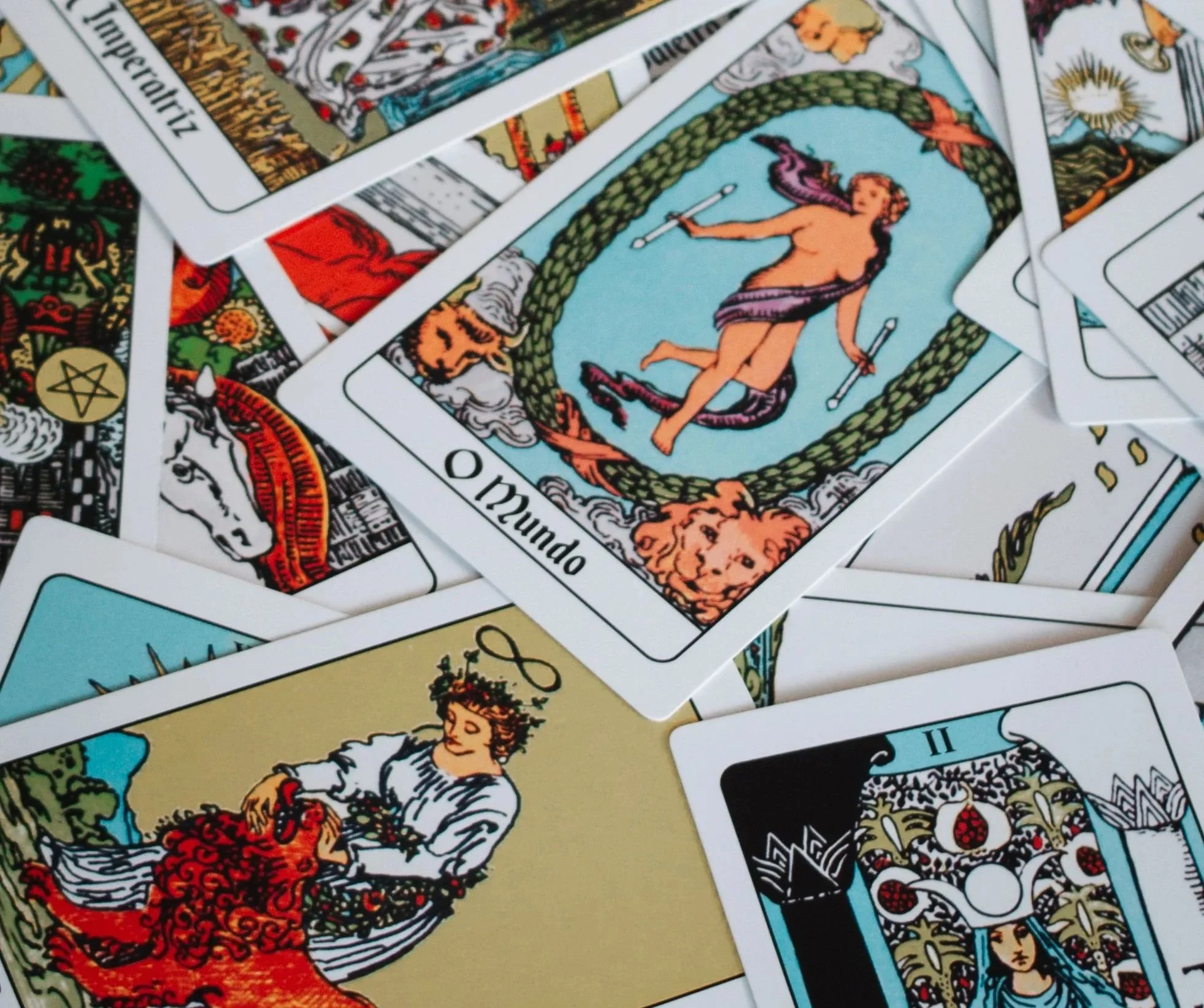
Activating Your Archetypal Allies
People ask me all the time, what does it mean to “play in the dark?”
This week, another way to play landed in my lap and I am having a blast. Activating my archetypal allies.
It has been so alive for my imagination, my creativity, my embodiment, my compassion, my intellect. It brings everything together in a way that feels integrated. And honestly, it just leaves me smiling.
It has also been deeply supportive as I move through some personal changes. And I have started bringing this form of play into my work with clients. It is incredible to witness the creative variety that emerges depending on what each person needs.

Playing in the Void: What putting a sheet over my head taught me
This past week, I’ve felt disoriented, restless, and unmotivated—like I’ve begun a brand-new chapter but somehow got stuck at the starting line.
One way I think about the metaphorical dark is as void energy.
But here’s the question: How do we play in those void moments when we don’t know what to do or where to go?
In times like this, I go through the motions. I’ll take the walk, cook the nourishing meal, read the good book. All the while waiting… waiting for inspiration, waiting for the nudge of guidance. And the longer I wait, the more restless I become. Restlessness turns to contraction. Then resentment. Then distraction. And soon enough, I’m slipping toward those sneaky addictive patterns that try to fill the void for me.

Play and Ritual at the Threshold
Thresholds are those tender spaces between what has ended and what is about to begin.
How do you honor endings and beginnings?
What helps you move through change?
Do you resist it—or invite it in?
Do you have rituals that help
I used to be terrified of change. I resisted it with everything I had. It often felt like walking through fire—certain I’d be incinerated on the other side. And in a way, I wasn’t wrong. Change is a kind of death.
But over time, I’ve learned to trust it. To even invite it. To allow myself to die many little deaths so I can release the parts that are ready to go and step more fully into myself.

The Gentle Art of Thawing Yourself
This week, I noticed myself slipping into overwhelm and shutdown.
For me, that often looks like wanting to disappear into hermit mode.
Sometimes this hermit energy is exactly what I need—it’s my healthy hermit, the one who helps me restore, rest, and gather myself.
But other times it tips into the indulgent hiding hermit—the one who numbs out, avoids, and disappears into binge-watching other people’s stories.
And here’s the thing: I don’t always notice when I’ve crossed that line. I’ll tell myself I’m resting, but if I wake up feeling more depleted and emotional instead of restored, that’s my clue: a part of me has slipped into hiding.
I used to feel shame about this cycle. I thought it meant I was weak, lazy, or doing something wrong. But now I see it as a part of me asking for care—a frozen, shut down part that simply needs tending.

Kryptonite for Shame!
Why do we people-please? Why is it so hard to stop? Why does it sneak into so many of our behaviors and culture?
That hot, icky, ouchy shame that whispers there’s something fundamentally wrong with us. The kind that makes us want to run and hide. That tells us to do what we think we’re supposed to. And of course we’ll do almost anything to escape the discomfort of it—because the shame alarm is LOUD & UNCOMFORTABLE.
When it comes to people-pleasing, part of us believes that if we show up authentically, we’ll be rejected or pushed out. At its core, it’s really about a fear of disconnection—which once upon a time, for our ancestors, could mean death. That fear lives deep in our bodies.
But here’s the thing: we’re evolving. And it’s time to remind our bodies and minds of a new truth.

People-Pleasing, Meet Your Playful Undoing
Lately, I’ve been talking with so many people about how challenging it can be to unwind our people-pleasing patterns—even when we want to show up honestly and authentically. These patterns are so deeply woven into our culture that they sneak in through surprising, subtle, and often frustrating ways. And the truth is: it can feel genuinely unsafe to let them go.
I’ve created four playful ways to explore common archetypes that show up in people-pleasing—each one paired with its own playlist to help you fully embody the energy.

Is it Possible to Play with Grief?
If there’s one thing that changed my life more than anything, it was learning to honor and tend to my grief. To create loving space for it. In learning how to meet my grief, my capacity to feel whole—and to love myself—has grown exponentially.
This is also a prayer I hold for the world: that we learn to turn toward our grief with love, compassion, and curiosity. If we could do that, the world would be so different. And since we were never meant to carry it alone, it matters deeply that we gather in community to learn how.
I know it can feel strange to put grief and play in the same sentence. You might even feel a strong reaction to it. For me, ritual is a form of play—it becomes the bridge between grief and play, and it’s how I connect with both.
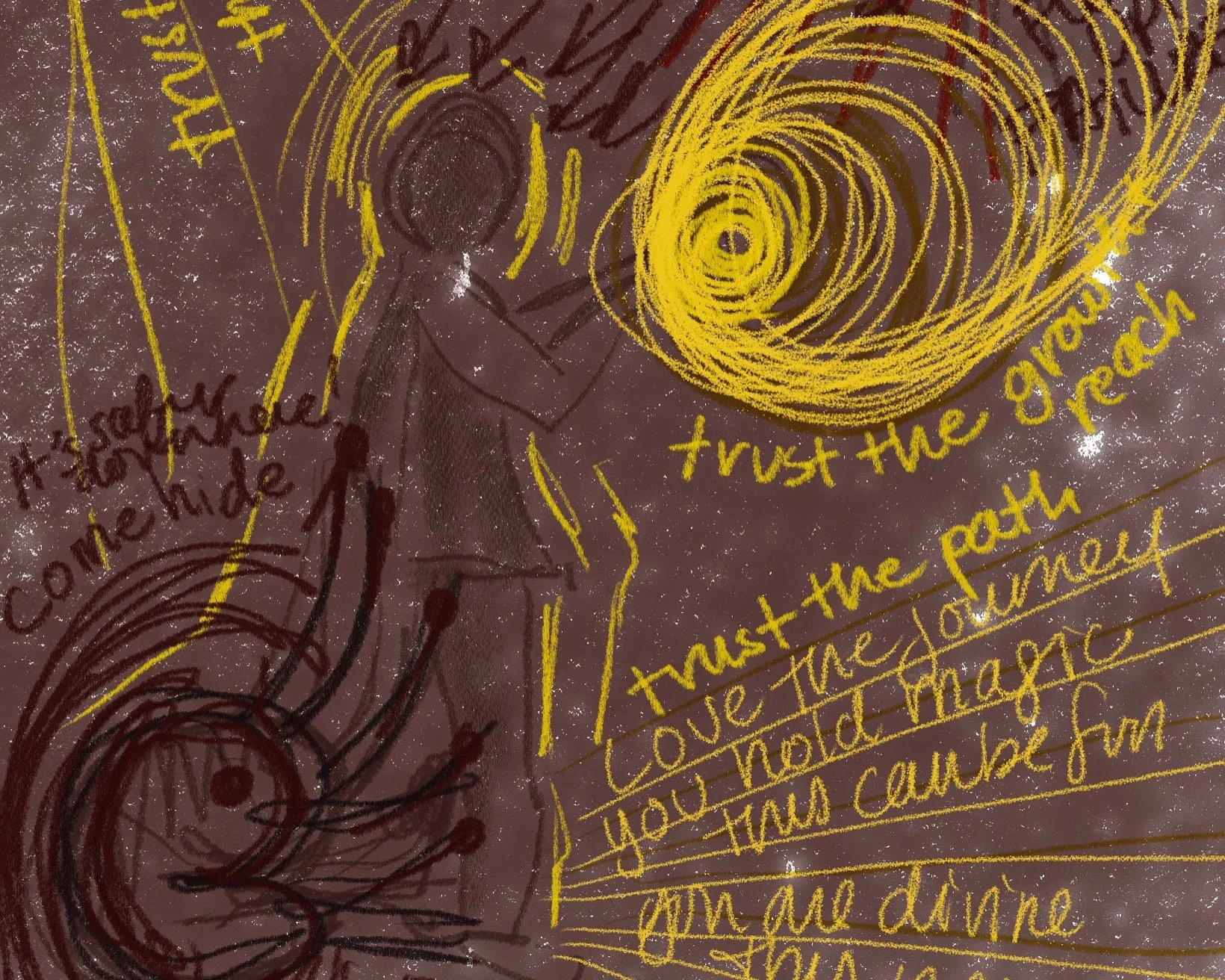
Art for your Parts
I was feeling some darkness and heaviness. Negative thoughts and beliefs started to sneak in, and I decided to practice what I preach: I asked myself, “How do you want to play with this?”
I got curious. What are these thoughts? What’s being triggered in me? Which parts of me are showing up?
As the answers came, I realized the artist in me wanted to play. Three distinct parts emerged, and I began to imagine what they looked like and how they related to one another.
I saw the part of me holding and growing the light—the one that trusts, feels the beauty of what I’m building, and stays connected to intuition and the path ahead. But alongside her were two other parts clouding that experience.

Dancing with Rage
“Rage is unalchemized passion—absolutely a force for good, if it wakes people up to the truth in the world.” -Kasia Urbaniak
As someone who used to be afraid of my own anger—and deeply uncomfortable with others’—I carried a lot of shame around it. Learning to embrace the power and wisdom of anger has been a journey.
Anger is an emotion. It wants to move through us.
We don’t always get to choose when it arrives,
but we do get to choose what we do with it.

Trying on Different NOs
Imagine two women facing each other, experimenting with different NOs—like trying on outfits to see how they feel and how they land.
Have you ever played with different kinds of NOs?
(I’ll admit—I had to Google the plural of “no” while writing this.)
At one of my play groups, two women shared the challenges they were having with boundaries and saying NO. I could definitely relate—and I was excited to explore how we might play with it.
One thing I know about play: it creates low-stakes, low-risk spaces to experiment.
And yet, the body holds memories of when it wasn’t safe to say NO.

Origin Story
Truthfully, the origins of How to Play in the Dark have been unfolding throughout my life. My challenges of getting lost in the dark, the heaviness, the contraction and struggling to feel joy or light in those times DROVE ME. My inability to bypass or side step my pain BEGGED FOR ANSWERS. My self-consciousness and awkwardness in moments of play FUELED ME. My frozen and fawning parts that didn’t know how to take up space or express myself CRAVED SUPPORT. My curiosity and creativity were PLANTING POSSIBILITIES.
AND THEN… last summer there was a coalescing that happened like the best juicy epiphany you could imagine.
How a cat fight became part of my origin story!!!